Plan Your Perfect Dance Workshop: Space, Equipment & Timings
Discover how to plan a successful dance workshop by selecting the optimal studio space, essential equipment, and considering all logistical factors.

Mastering the Art of Planning a Dance Workshop
Organising a dance workshop requires meticulous planning, especially when it comes to securing the right physical space and essential equipment. Whether you're a seasoned choreographer or a budding instructor, understanding the critical elements that contribute to a successful event is paramount. This guide will walk you through the key considerations, from defining your workshop's format to ensuring the comfort and safety of your participants. By focusing on practical requirements, you can create an environment that fosters learning, creativity, and a truly memorable experience for everyone involved.
Defining Your Workshop's Core Elements
The foundation of a successful dance workshop is clearly defining its purpose, dance style, audience and expected class size. Consider whether you are planning an intensive session for professionals, a beginner-friendly introduction or a community-focused class. Each format may require different levels of space, equipment and atmosphere.
Participant numbers are equally important when choosing a dance studio hire. A small choreography workshop with 10–15 participants may benefit from an intimate space, while larger classes of 30 or more require a more spacious studio. Estimating your numbers accurately helps you avoid paying for unnecessary space while ensuring participants have enough room to move safely and comfortably.
Studio Size and Flooring
Choosing the right dance studio hire is a critical decision that can directly affect the quality, safety and overall experience of your workshop. Rather than focusing only on the appearance or location of a studio, consider whether the space itself is suitable for the number of participants and the type of movement involved.
Studio Size: The studio should provide enough usable space for participants to move comfortably without constantly getting in each other's way. A common guideline is to allow at least 100 square feet (approximately 9.3 square metres) of usable space per person for many dance styles, although the ideal amount can vary depending on the activity.
Workshops involving travelling steps, jumps or large group formations may require considerably more space. When comparing rehearsal studio hire options, visualise your planned choreography or class structure within the room. Consider whether participants can move freely, practise combinations safely and transition between activities without obstruction.
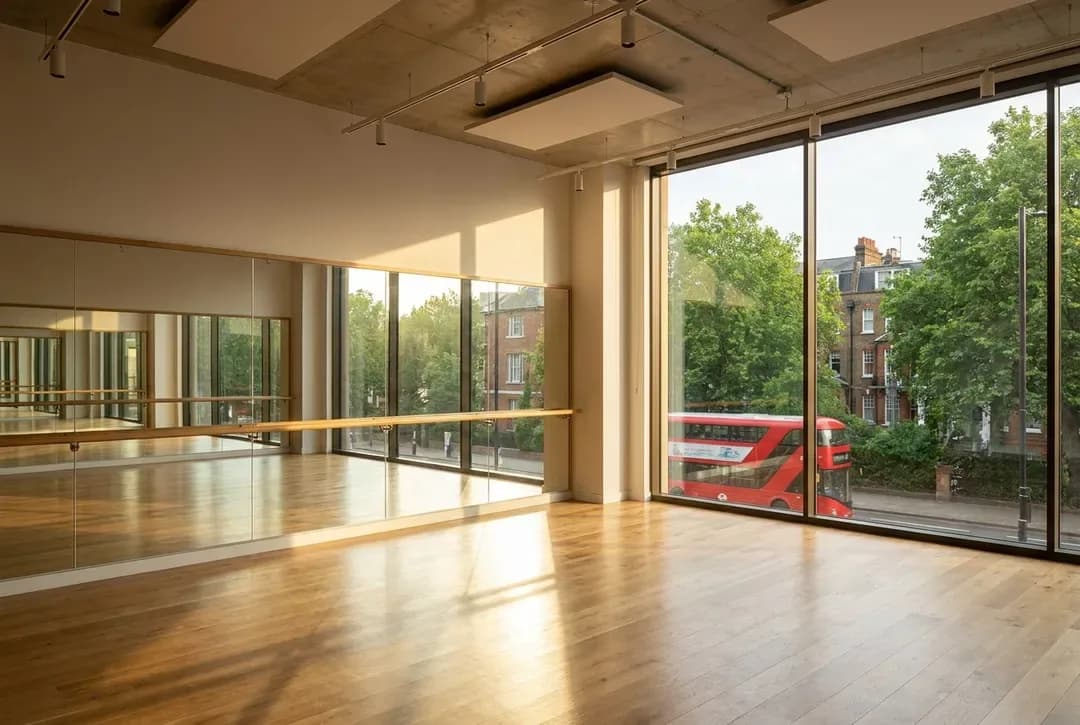
Flooring: The type of flooring is particularly important for dance workshops, as the wrong surface can affect both performance and participant safety. Wooden sprung floors are generally considered ideal because they provide cushioning, absorb impact and help reduce strain on joints, making them particularly suitable for intensive training or styles involving jumps.
Vinyl or Marley flooring can also be suitable for many dance styles. Avoid spaces with excessively slippery or sticky surfaces, as well as hard materials such as concrete or tile, which can increase the risk of discomfort or injury. Always check the type and condition of the flooring when considering a dance studio rental.
Equipment, Facilities and Logistics
When choosing a dance studio for a workshop, consider the following practical requirements:
Mirrors: Useful for technique, choreography and self-correction. Check whether the mirror coverage and placement suit your workshop style.
Sound System: Make sure the studio has reliable, clear audio that is compatible with your smartphone, laptop or other playback device.
Comfort and Facilities: Look for effective ventilation and temperature control, as well as changing areas, accessible restrooms, drinking water and a suitable waiting area.
Setup and Breakdown Time: Allow enough time before and after the workshop to arrange equipment, prepare the space, complete a sound check and pack away. A two-hour workshop may require a 2.5–3-hour venue hire to accommodate these tasks.
Safety, Accessibility, and Pre-Booking Checks
Prioritising safety and accessibility ensures that your workshop is inclusive and minimises risks. Check that the studio has appropriate safety measures in place, such as non-slip flooring, clear pathways, and emergency exits. If your workshop is aimed at individuals with specific accessibility needs, confirm that the venue meets those requirements, such as ramp access, accessible restrooms, and adequate space for mobility aids. A thorough safety briefing at the start of the workshop is also recommended, reminding participants of potential hazards and encouraging mindful movement.
Before committing to booking a dance studio, instructors and organisers should conduct a pre-booking checklist. This should include verifying the exact dimensions and capacity of the space, confirming the type of flooring and its condition, checking the availability and functionality of the sound system, assessing the heating and ventilation, and understanding the available changing and restroom facilities. It's also wise to clarify policies regarding cancellations, insurance, and any specific rules or regulations of the venue. Understanding these details upfront can prevent potential issues and ensure the chosen space aligns perfectly with your workshop's needs.
Estimating Total Space Hire Time
Calculating the total space hire time needed for your dance workshop involves a holistic view beyond just the lesson duration. Start with the core workshop length. Then, add a minimum of 30 minutes for setup before participants arrive. This allows for equipment arrangement, music testing, and a moment for the instructor to compose themselves. Following the workshop, allocate another 30 minutes for breakdown, tidying the space, and ensuring all personal belongings are collected. For larger workshops, or those requiring significant setup (e.g., specific lighting, props), these buffer times may need to be extended. It's always better to overestimate slightly and have unused time than to be rushed and compromise the quality of the setup or breakdown process. For instance, a 90-minute beginner dance class might necessitate booking the studio for a full 2 hours and 30 minutes.
Finding Your Ideal Dance Workshop Space with SpaceBiz
Navigating the options for a suitable dance workshop space can be time-consuming. Platforms like SpaceBiz simplify this process by connecting organisers with a diverse range of venues across the UK. Whether you require a dedicated dance studio hire in London, a versatile rehearsal studio hire in Manchester, or a general workshop space adaptable for movement, SpaceBiz offers a curated selection. By filtering based on your specific needs – size, location, amenities, and flooring type – you can efficiently identify and secure the perfect dance class space that meets all your practical requirements, ensuring your next dance event is a resounding success.
Frequently Asked Questions
What is the most important factor when choosing a dance workshop space?
While several factors are crucial, the suitability of the flooring for dance movement and the overall size of the space relative to the number of participants are arguably the most important. These directly impact safety, comfort, and the ability to execute planned activities effectively.
How much space do I need per person for a dance workshop?
A general guideline is at least 100 square feet (approx. 9.3 sq m) per person, but this can increase for styles involving significant travel or large group formations. Always consider the specific demands of your dance style and workshop format.
Should I book a dance studio with mirrors?
Mirrors are highly beneficial for technique-focused workshops, allowing dancers to self-correct. However, for workshops centred on improvisation or less technique-specific styles, they may be less critical. Assess based on your workshop's objectives.
What should I check regarding the sound system?
Ensure the system is powerful enough for the space, offers good sound quality, is easy to operate, and is compatible with your devices. Test it before the workshop begins.
How do I ensure the studio is accessible?
Confirm ramp access, accessible restrooms, and sufficient manoeuvring space if participants have mobility requirements. It's best to call the venue directly to discuss specific accessibility needs.